
Welcome to Mugla: Turkey’s Coastal Treasure Province
Mugla is one of Turkey’s most rewarding travel regions, stretching across the country’s southwestern coastline where the Aegean and Mediterranean worlds meet. It is home to some of Turkey’s most famous holiday destinations, including Bodrum, Marmaris, Fethiye, Dalyan, Datca, Gocek, and Oludeniz.
This province offers a rare combination of experiences: ancient ruins, turquoise beaches, pine-covered mountains, yacht marinas, traditional villages, lively bazaars, island boat trips, mud baths, hiking trails, and some of the best coastal scenery in Turkey.
Whether you want a luxury beach escape, a family holiday, an archaeological route, a gulet cruise, a hiking adventure, or a slow Mediterranean-style journey, Mugla gives you endless ways to experience Turkey’s natural beauty, history, and hospitality.
Why Mugla Is One of Turkey’s Best Travel Regions
Mugla is not just one destination. It is a full travel region with multiple coastal personalities. Bodrum is stylish and historic, Marmaris is lively and scenic, Fethiye is adventurous and nature-focused, Dalyan is peaceful and heritage-rich, and Gocek is refined and yacht-oriented.
This variety makes Mugla ideal for travelers who want more than a single beach resort. You can explore ruins in the morning, swim in a turquoise bay in the afternoon, shop at a local market before sunset, and enjoy seafood or meze beside the marina at night.
Mugla Travel Snapshot
The Rich History of Mugla
Mugla’s history reaches back thousands of years and includes Lycian, Carian, Greek, Roman, Byzantine, Seljuk, Ottoman, and modern Turkish layers. The region’s coastlines, ports, valleys, and mountain routes made it a meeting point for trade, settlement, and cultural exchange.
Lycian Heritage
Fethiye, Tlos, Xanthos, Pinara, and other sites preserve the region’s ancient Lycian identity through rock tombs, ruins, inscriptions, and mountain landscapes.
Carian and Aegean Influence
Bodrum, ancient Halicarnassus, and coastal settlements reflect the deep Aegean character of western Mugla.
Ottoman and Turkish Culture
Markets, mosques, old houses, village life, cuisine, festivals, and hospitality show the continuity of local Turkish identity.
Top Attractions and Sites in Mugla
Mugla’s highlights are spread across the province, so the best itinerary depends on your base. Bodrum, Marmaris, Fethiye, Dalyan, and Datca each unlock different landscapes and historical routes.
Bodrum Castle
A landmark fortress overlooking Bodrum harbor, home to the Museum of Underwater Archaeology and one of the region’s most iconic views.
Ancient Kaunos
A fascinating archaeological site near Dalyan, with ruins, rock tombs, a theater, baths, and views over wetlands and river landscapes.
Fethiye Lycian Rock Tombs
Carved into cliffs above Fethiye, these impressive tombs are among the region’s most memorable ancient landmarks.
Saklikent Gorge
A dramatic canyon adventure where visitors can walk through cool water, steep rock walls, and refreshing natural scenery.
Dalyan Mud Baths
A popular wellness-style stop near Dalyan, usually combined with river cruises, Kaunos, and Iztuzu Beach.
Marmaris Grand Bazaar
A lively shopping area with textiles, spices, souvenirs, leather goods, sweets, jewelry, and classic Turkish market energy.
Exploring the Natural Wonders of Mugla
Mugla’s natural beauty is one of its biggest strengths. The region is famous for pine forests, limestone cliffs, hidden bays, islands, beaches, lakes, rivers, wetlands, and some of Turkey’s most scenic coastal routes.
Oludeniz Blue Lagoon
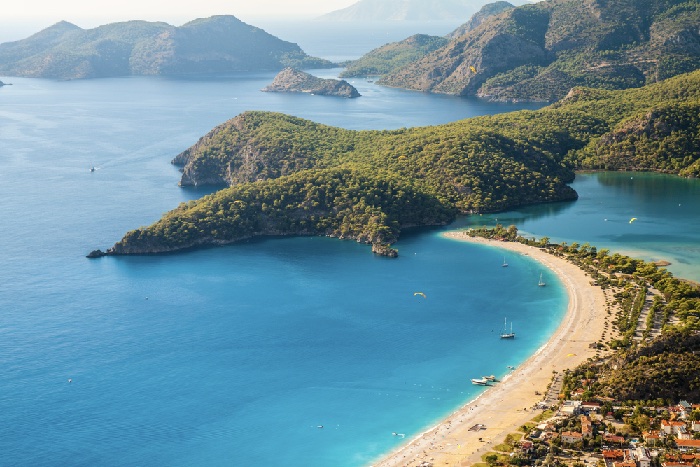
One of Turkey’s most famous beach landscapes, known for turquoise water, mountain scenery, paragliding, and postcard views.
Butterfly Valley
A dramatic hidden valley near Fethiye, accessible mainly by boat, loved for cliffs, beach views, hiking, and wild natural atmosphere.
Koycegiz Lake
A peaceful lake region connected with Dalyan, river journeys, birdwatching, boating, wetlands, and a slower pace of travel.
Sedir Island
Also known as Cleopatra Island, this scenic island is famous for its unusual sand, clear water, ancient ruins, and boat-trip appeal.
The Lycian Way
A legendary long-distance hiking route passing ancient sites, coastal cliffs, mountain paths, villages, beaches, and dramatic viewpoints.
Gocek Bays
A refined sailing area with sheltered bays, islands, marinas, blue-water anchorages, and ideal conditions for private boat trips.
Local Culture and Cuisine in Mugla
Mugla’s culture is shaped by coastal life, village traditions, agriculture, seafood, markets, olive oil cuisine, local festivals, and Mediterranean hospitality. Food is one of the best ways to connect with the region.
Gozleme
A thin stuffed flatbread often filled with cheese, herbs, potato, spinach, or minced meat, commonly found in markets and village stops.
Seafood and Meze
Fresh fish, calamari, octopus, shrimp, yogurt dips, olive oil vegetables, and seasonal meze define many coastal meals.
Pide and Kofte
Comforting Turkish favorites that work well for casual lunches, family meals, and relaxed local dining.
Markets and Bazaars
Visit markets in Fethiye, Bodrum, Marmaris, and local towns for spices, produce, honey, cheese, textiles, ceramics, and street food.
Best Time to Visit Mugla
The best time to visit Mugla is spring and autumn, especially April to June and September to October. These months offer warm weather, pleasant sea conditions, fewer crowds, and more comfortable temperatures for sightseeing, hiking, markets, and ruins.
July and August are peak summer months, ideal for beaches and nightlife but also the hottest and busiest period. Travelers visiting in high summer should book hotels, boats, tours, and restaurants early.
Winter is quieter and more local, especially in towns such as Mugla city, Bodrum, and Fethiye. Some beach facilities may close, but cultural exploration and slower travel remain possible.
Where to Stay in Mugla
Choosing where to stay in Mugla depends on your travel style. Bodrum is best for luxury and nightlife, Fethiye is best for nature and adventure, Marmaris is best for lively beach holidays, Dalyan is best for relaxed river scenery, and Gocek is best for sailing and refined coastal escapes.
Luxury Resorts
Bodrum, Gocek, Marmaris, and Fethiye offer upscale hotels, beach resorts, boutique stays, spas, marina views, and private beach access.
Mid-Range Hotels
Comfortable hotels and aparthotels are widely available in coastal towns, giving travelers a practical balance of location, facilities, and value.
Villas and Apartments
Great for families, longer stays, groups, and travelers who want kitchens, privacy, pools, and a more independent holiday rhythm.
Getting Around Mugla
Mugla is a large province, so transportation planning matters. Distances between Bodrum, Marmaris, Fethiye, Dalyan, and inland sites can be longer than expected.
Car Rental
Best for road trips, beaches, ruins, villages, viewpoints, and flexible travel between towns.
Dolmus and Buses
Shared minibuses and regional buses are useful for local movement and budget-friendly travel between nearby towns.
Private Transfers
Ideal for families, airport arrivals, luxury trips, multi-destination itineraries, and travelers who prefer comfort.
Boat Trips
Many coastal highlights are best reached by boat, especially bays, islands, coves, and swimming stops.
Want to Add Mugla to Your Turkey Itinerary?
Ask Aladdin can help you combine Mugla with Bodrum, Fethiye, Marmaris, Dalyan, Ephesus, Pamukkale, Cappadocia, Istanbul, Antalya, gulet cruises, private transfers, and custom Turkey travel planning.
Ask a Turkey Travel ExpertBest Nearby Destinations and Day Trips from Mugla
Mugla is perfectly positioned for combining coastal relaxation with major historical and natural attractions across western and southwestern Turkey.
Ephesus
One of Turkey’s greatest ancient cities, often combined with Bodrum, Kusadasi, Izmir, and western Turkey cultural routes.
Pamukkale
Turkey’s famous white travertine terraces and Hierapolis ruins can be added to a longer western Turkey itinerary.
Dalyan
A peaceful town known for river cruises, Kaunos ruins, mud baths, rock tombs, and access to Iztuzu Beach.
Kas
A scenic coastal town east of Mugla, loved for diving, boutique stays, ancient ruins, clear water, and relaxed Mediterranean style.
Practical Mugla Travel Tips
Carry Turkish Lira
Cards are common in tourist areas, but cash is useful for markets, taxis, small restaurants, beach services, and tips.
Choose Your Base Wisely
Bodrum, Marmaris, Fethiye, Dalyan, and Gocek offer very different travel styles, so match your base to your priorities.
Book Early in Summer
Hotels, boat trips, car rentals, beach clubs, and popular restaurants fill quickly in July and August.
Protect Yourself from the Sun
Use sunscreen, hats, sunglasses, water, shade breaks, and avoid intense midday hikes in summer.
Respect Local Culture
Beach towns are relaxed, but modest dress is still appropriate in villages, mosques, markets, and non-resort areas.
Protect Nature
Avoid littering, respect marine life, stay on marked paths, and help protect beaches, bays, forests, and ancient sites.
Suggested Mugla Itinerary Ideas
3 Days in Mugla
Choose one base such as Bodrum, Marmaris, or Fethiye. Add beaches, markets, a boat trip, local food, and one historical site.
7 Days in Mugla
Combine Bodrum, Dalyan, Fethiye, Oludeniz, Saklikent Gorge, a gulet cruise, markets, ruins, and beach time.
10 Days or More
Build a full southwestern Turkey route with Bodrum, Datca, Marmaris, Dalyan, Fethiye, Gocek, Ephesus, and Pamukkale.
Keep Exploring Turkey with Ask Aladdin
Frequently Asked Questions About Mugla
Is Mugla worth visiting?
Yes. Mugla is one of Turkey’s best regions for beaches, ancient ruins, boat trips, coastal towns, forests, markets, food, and Mediterranean-style travel.
What is Mugla famous for?
Mugla is famous for Bodrum, Marmaris, Fethiye, Oludeniz, Dalyan, Gocek, beaches, gulet cruises, Lycian ruins, pine forests, and turquoise bays.
How many days do I need in Mugla?
Three days can work for one base, but seven to ten days are better if you want to explore multiple towns, beaches, ruins, and boat routes.
What is the best time to visit Mugla?
April to June and September to October are the best months for warm weather, comfortable sightseeing, fewer crowds, and good beach conditions.
Where should I stay in Mugla?
Stay in Bodrum for luxury and nightlife, Fethiye for nature and adventure, Marmaris for lively beach holidays, Dalyan for river scenery, or Gocek for sailing and refined coastal escapes.
Mugla in One Sentence
Mugla is Turkey’s southwestern coastal wonderland, where Bodrum, Marmaris, Fethiye, Dalyan, Oludeniz, ancient ruins, blue bays, pine forests, local markets, and gulet cruises create an unforgettable Mediterranean journey.
Plan Your Mugla Journey With Ask Aladdin
Ready to Discover Mugla and Turkey’s Turquoise Coast?
Let Ask Aladdin help you plan a smooth Turkey itinerary that includes Mugla, Bodrum, Fethiye, Marmaris, Dalyan, Oludeniz, Ephesus, Pamukkale, Cappadocia, Istanbul, gulet cruises, private transfers, cultural tours, and beach stays.
Our Turkey travel specialists can help you choose the right base, season, hotel, beaches, gulet cruise, transfers, tours, local food stops, and itinerary pace based on your dates, interests, and budget.


