
Introduction to Egyptian Creation Myth
The ancient Egyptian civilization left behind a rich tapestry of religious and cultural practices, many of which have fascinated scholars for centuries. One of the most intriguing aspects of ancient Egyptian culture is its creation myth. The Egyptian creation myth not only gives us insight into how the ancient Egyptians understood the world's origin but also offers us a glimpse into their complex and vibrant pantheon of gods and goddesses.
The Egyptian creation myth is a testament to the grandeur and depth of ancient Egyptian religious belief. It's a tale that involves the cosmos, divine beings, and the birth of existence itself. As with any creation myth, it serves as a metanarrative, a story that forms the backdrop against which all other levels are set.
As with many ancient cultures, the Egyptian creation myth is not a single, unified narrative but a collection of differing accounts. However, the stories share commonalities, and the role of the divine potter, the ancient Egyptian God known as Khnum, is central to many of them.
Understanding the concept of Egyptian Gods and Goddesses
To truly appreciate the significance of Khnum and his role in the Egyptian creation myth, we must first delve into the concept of gods and goddesses in Egyptian mythology. The gods of Egyptian mythology are a diverse and intricate pantheon, each with unique attributes, roles, and stories.
The ancient Egyptians viewed their gods as powerful beings who controlled everyday life's natural forces and aspects. The gods were deeply woven into the fabric of their existence. Each Egyptian God and goddess had a role to play, from the sun god Ra, who illuminated the world, to the god Anubis, who presided over the afterlife.
The Egyptian gods and goddesses weren't distant beings. They were deeply entwined with the world of the living. Their stories, interactions, feuds, and alliances were mirrored in the world of humans. They were not just worshipped; they were lived.
The significance of the Ancient God Khnum in Egyptian mythology
Ancient Egyptian religion was polytheistic, with a vast collection of gods and goddesses, each having their role and significance. Among them, Khnum holds a unique and pivotal position. Known as the "Divine Potter" or the "Lord of Created Things from Himself," Khnum is revered as a creator god.
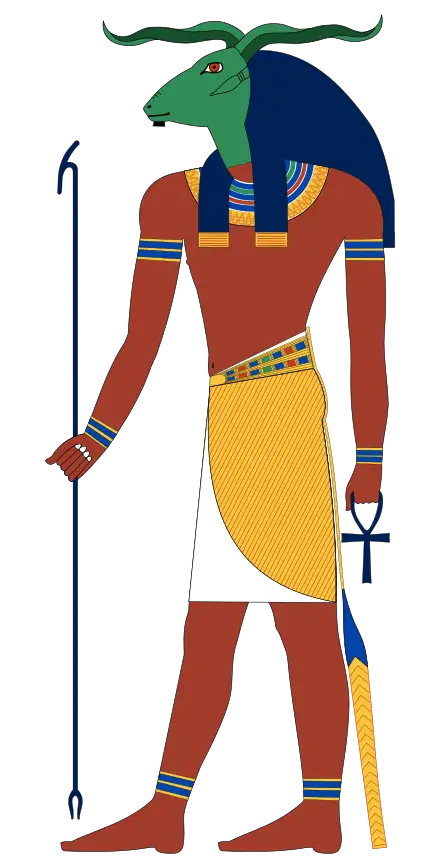
Khnum was associated with the Nile River, especially the source of the Nile, where he was believed to have created everything. He was also associated with fertility and rebirth, reinforcing his role as a creator. In depictions, Khnum is often portrayed as a man with the head of a ram, symbolizing strength and procreative power.
Khnum: The Egyptian God of Creation
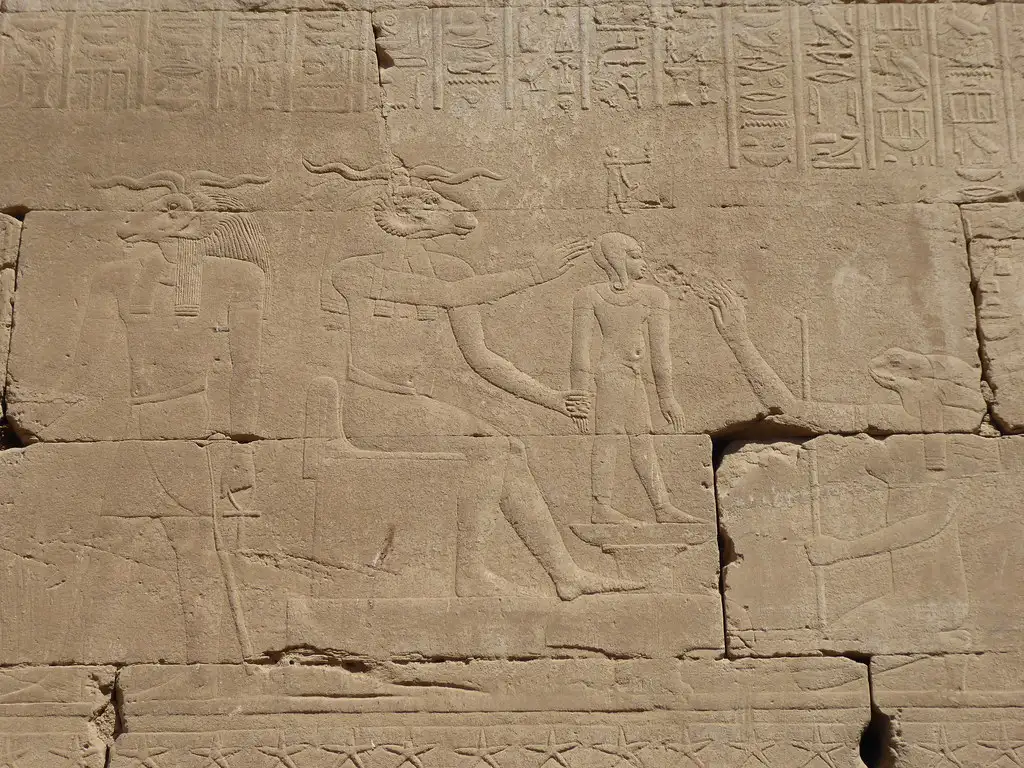
Khnum's role in the Egyptian pantheon was crucial. Khnum was believed to have formed the world on his potter's wheel as the God of creation. The image of Khnum, shaping the earth and all its creatures from clay, is one of Egyptian mythology's most powerful and enduring symbols.
The ancient Egyptians believed that Khnum crafted each person's body before birth and breathed life into them. This belief underscores Khnum's role as a life-giver and highlights the Egyptians' understanding of life's sanctity and divine origin.
The role of Khnum in the Egyptian creation story
In the Egyptian creation story, Khnum's role is paramount. According to one of the most popular versions of the Egyptian creation myth, in the beginning, there was only the dark, watery chaos known as Nun. The sun god Ra emerged from this primordial soup, bringing light and order. Ra then created Shu, the God of air, and Tefnut, the goddess of moisture. These two bore Geb, the earth god, and Nut, the sky goddess.
However, the world was still formless until Khnum, the divine potter, took to his wheel. He shaped the earth and all its creatures, infusing them with the sacred breath of life. This act of creation made Khnum one of the most revered and influential gods in Egyptian mythology.
The power and influence of Khnum among Egyptian gods and goddesses
Khnum's power and influence among the Egyptian gods and goddesses are undeniable. Khnum was regarded as the God who shaped life with great reverence and awe. His ability to create life from inanimate clay made him a god of unmatched potency.
Moreover, Khnum's association with the Nile, the lifeblood of Egypt, further amplified his importance. He was seen as the guardian of the Nile's source and was believed to control the river's annual flooding, which was crucial for Egyptian agriculture.
Khnum and other gods in Egyptian mythology
Despite his might and significance, Khnum did not exist in isolation. He was part of Egyptian mythology's rich and complex pantheon of gods. He was often associated with other creator gods, such as Ptah and Amun, and was sometimes merged with them, reflecting the fluid nature of Egyptian religious beliefs.
Khnum was also part of a triad of gods worshipped on the island of Elephantine. This triad consisted of Khnum, his wife Satet, the fertility goddess, and their daughter Anuket, the goddess of the cataracts of the Nile.
The depiction of Khnum in Ancient Egypt
In ancient Egypt, Khnum was venerated through various forms of art and architecture. He was commonly depicted as a man with the head of a ram, crafting the world on his potter's wheel. This iconography is a testament to his role as the divine potter and is a striking visual representation of his creative power.
God Khum's name :
Temples dedicated to Khnum can be found throughout Egypt, the most famous on the island of Elephantine. These temples served as places of worship where the ancient Egyptians could honor Khnum and seek his blessings.
The legacy of Khnum in the modern understanding of Egyptian mythology
Today, Khnum remains a central figure in our understanding of Egyptian mythology. His role as the divine potter, crafting the world and its inhabitants, offers valuable insights into how the ancient Egyptians perceived the origins of life and the universe.
Moreover, Khnum's story serves as a reminder of the interconnectedness of life and the divine in ancient Egyptian belief. It underlines the Egyptians' reverence for the natural world and their understanding of the sacred's role in shaping and sustaining it.
Conclusion: Relevance of Khnum in understanding the Egyptian Creation Myth.
In conclusion, Khnum plays an integral role in the Egyptian creation myth. His story and the beliefs surrounding him provide a window into the ancient Egyptians' worldview and spiritual beliefs. By studying Khnum, we gain a deeper understanding of Egyptian mythology and a richer appreciation of the fascinating civilization that gave birth to these myths.
Understanding the Egyptian creation myth and the role of ancient gods like Khnum allows us to engage with the past profoundly and meaningfully. It reminds us that the stories we tell about our origins are not just about explaining how we came to be but also about defining who we are and how we understand our place in the cosmos.
```


