- Mailinfo@ask-aladdin.com
- Phone+16179339330
- search
 English
Greco-Roman architecture in Egypt is a fusion of two great cultures: the Greek and the Roman. The Greeks brought their love of beauty and symmetry to Egypt, while the Romans added their engineering prowess and sense of scale. The result is a unique and distinctive style of architecture that can be found nowhere else in the world. These Greco-Roman monuments in Egypt remind us of the time when Egypt was a significant center of trade and culture. They are also a testament to the ingenuity and artistry of the people who built them.
Once standing tall as one of the Seven Wonders of the Ancient World, the Pharos of Alexandria, although no longer in existence, has left an ineffaceable mark on Egypt's heritage. Its ingenious construct, involving a series of mirrors to project light far into the sea, served as a beacon for mariners and symbolized Hellenistic technological prowess. Its faint echoes in the Qaitbay Citadel, built on the former lighthouse's ruins, draw myriad history enthusiasts to this day.
Among the remarkable Greco-Roman architectural marvels is the Serapeum of Alexandria. This temple complex dedicated to Serapis, a deity created by the amalgamation of several Greek and Egyptian gods, underscores the cultural synthesis of the era. The temple symbolizes the time's deep-rooted devotion and architectural grandeur.
The enigmatic Edfu Temple lies deep in the heart of Egypt's Western Desert. This well-preserved temple, dedicated to the falcon god Horus, reveals the rich history of the Greco-Roman period. Built over 180 years, Edfu Temple showcases the traditional architecture of ancient Egypt with minimal Hellenistic influence. Exploring its halls and passageways, you'll encounter fascinating inscriptions and reliefs depicting Horus and Seth's sacred drama.
An intellectual hub of the ancient world, the Library of Alexandria, though no longer extant, continues to ignite the archaeological world's imagination. It heralded a new chapter in knowledge exchange, housing an astounding collection of scrolls and attracting scholars from across the globe.

A grand tower was erected in tribute to Emperor Diocletian, standing as a remarkable structure rivaling the Caesareum and Soma. Underground galleries lie adjacent to this splendid monument, which served as the final resting place for three Apis bulls and three sphinxes. The pillar earned its name due to a misconception among Romans who believed it to house the head of Pompey, the victim of a tragic demise in 48 B.C. Undoubtedly, Pompey's Pillar stands as the tallest ancient monument in Alexandria.
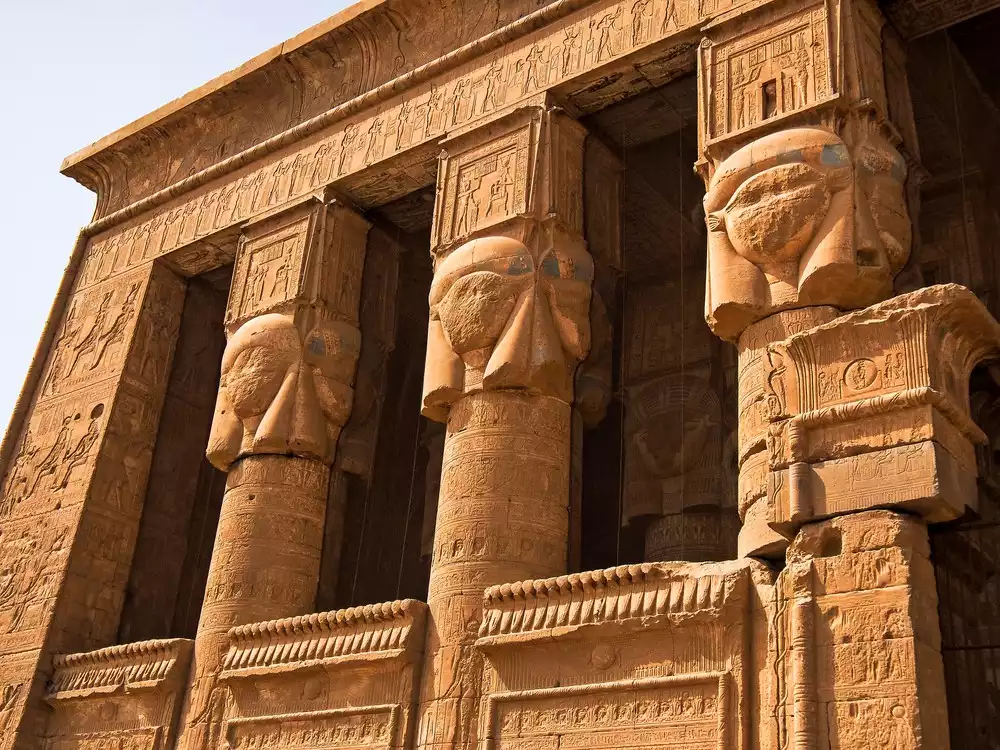
A short drive away from Luxor lies the hidden gem of Dendera Temple. This well-preserved temple complex is dedicated to the goddess Isis and offers a fascinating glimpse into the Ptolemaic and Roman periods of Egyptian history. As you explore its sacred halls and birth houses, known as mammisi, you'll be captivated by the intricate reliefs and the serene beauty of the temple's design. Don't miss the large Hathor Temple, with its stunning Hathor-headed columns, a symbol of music and joy.
The Temple of Dendera is one of Egypt's most well-preserved Greco-Roman temples. It is dedicated to the goddess Hathor, the patron goddess of Dendera. The temple was built over several centuries, reflecting the changing styles of Greco-Roman architecture.
The Temple of Dendera is a masterpiece of architecture. It is built on a massive scale and is decorated with intricate reliefs and sculptures. The reliefs depict scenes from the life of Hathor, as well as stories from Egyptian mythology. The sculptures are some of the finest examples of Greco-Roman art. The Temple of Dendera is a UNESCO World Heritage Site and one of Egypt's most popular tourist destinations.

The Temple of Philae is another beautifully preserved Greco-Roman temple. It is located on an island in the Nile River and is dedicated to the goddess Isis. The temple was built over several centuries, reflecting the changing styles of Greco-Roman architecture. The Temple of Philae is a masterpiece of architecture. It is built on a smaller scale than the Temple of Dendera but is no less impressive. The temple is decorated with intricate reliefs and sculptures, many of which depict scenes from the life of Isis. The Temple of Philae was once located on an island in the middle of the Nile River, but it was moved to its current location in the 1970s to save it from being flooded by the construction of the Aswan High Dam. The Temple of Philae is a UNESCO World Heritage Site and one of Egypt's most popular tourist destinations.
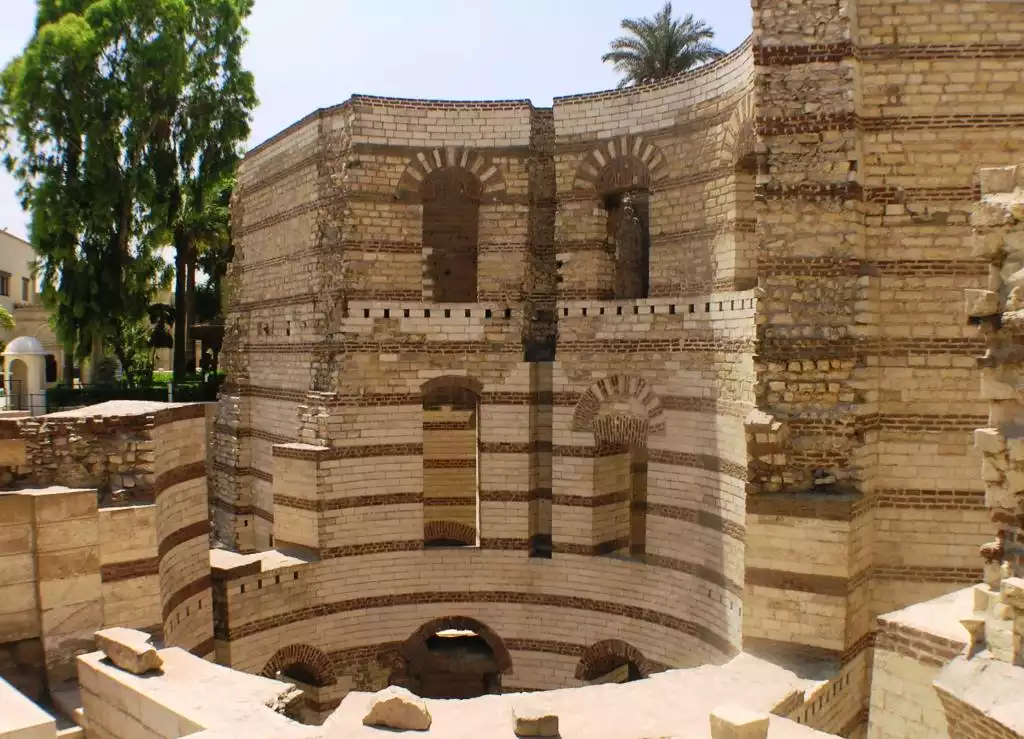
Fort Babylon is a massive fortress that the Romans built in the 1st century AD. It is located on the east bank of the Nile River in Cairo and was once used to protect the city from attack. Fort Babylon is a masterpiece of military architecture. It is built on a massive scale and is surrounded by thick walls and towers. The fort has a central courtyard and several barracks and storage rooms. Fort Babylon is a UNESCO World Heritage Site and one of Egypt's most popular tourist attractions.

Delving deep into the earth's belly, the Catacombs of Kom el Shoqafa are a hauntingly beautiful testament to the Greco-Roman era. This multilevel labyrinth of tombs marries Roman, Greek, and Egyptian artistic elements into a harmonious blend, making it a fascinating site for archaeologists and history lovers.

Near the Greco-Roman Museum lies the archaeological site of Kom Al-Dikka, known as the "mound of rubble" in Arabic. This site offers a rare glimpse into the ancient city of Alexandria, which has been built and rebuilt several times over its storied history. Here, archaeologists have uncovered a well-preserved Roman amphitheater, a Roman bathhouse, and a Roman villa adorned with exquisite mosaic decorations. Kom Al-Dikka provides a window into the Greco-Roman period's daily life and architectural marvel.


